The Sit Spot: Nature's Practice of Staying Put
Forest bathing usually moves — the slow wander, the sensory walk — but its deepest practice stays put: the sit spot, one outdoor place visited repeatedly, sat in quietly, watched across seasons. The naturalist’s oldest exercise, and stillness training disguised as birdwatching.

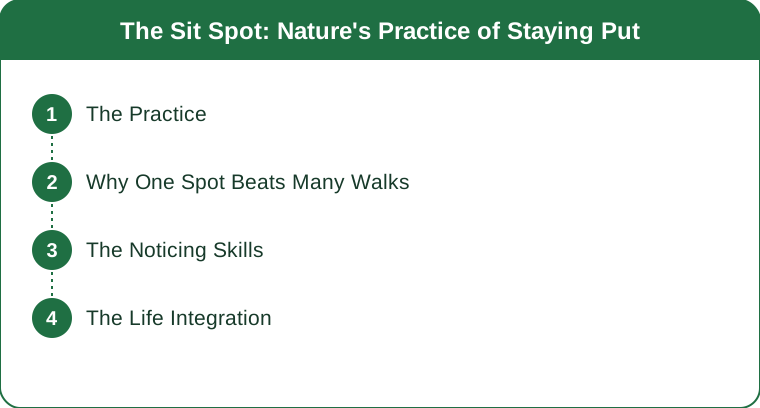
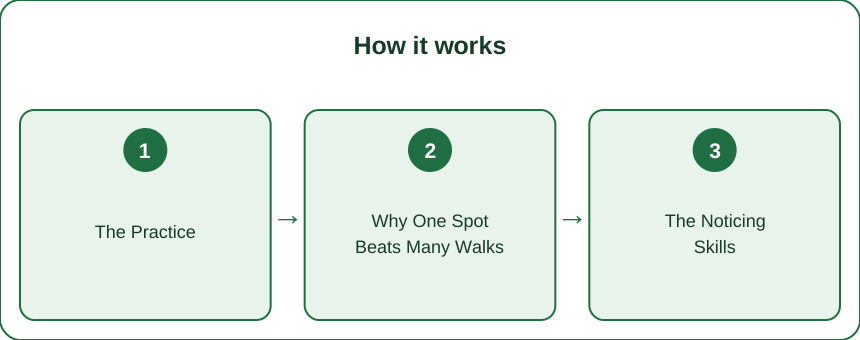
The Practice
The method in full: choose one spot (outdoors, reachable in minutes — the park bench, the garden corner, the creek-side log; proximity beats beauty, because the practice runs on frequency), visit regularly (2-4 times weekly, 15-20 minutes — the same spot, the repetition being the entire mechanism), and just… sit (no phone, no book, no task — watching, listening, noticing; the first visits feel like nothing happening, which is the withdrawal symptom of a stimulated life, and it passes).
Why One Spot Beats Many Walks
The repetition mechanism: the baseline effect (visiting one place repeatedly teaches its NORMAL — and normal known makes change visible; the new bird, the turned leaf, the light’s weekly shift; walks sample nature, sit spots know it), the wildlife dividend (still humans get habituated to — the fifteen-minute mark is when the birds resume business and the spot’s residents reappear; the moving walker never sees what the sitter becomes furniture for), the seasonal time-lapse (the same spot across months is a slow movie only regulars get to watch — the practice’s quiet reward structure), and the attention training (noticing-without-stimulus is the trainable skill — the sit spot is meditation with content, the accessible cousin from the sound-bath principle).

The Noticing Skills
What the spot teaches: the expanding senses routine (the first minutes’ settling ritual — sound inventory first, the furthest sound found; then the peripheral-vision widening; then the smallest-movement hunt — the structured noticing that fills the ‘what do I DO’ gap beginners feel), the bird-language layer (the alarm calls and movement patterns that narrate the area — the birding-by-ear chapter’s field campus), the journal option (three lines post-sit — weather, one observation, one question; the naturalist’s habit that compounds the practice), and the questions engine (the sit spot generates curiosity — what IS that plant, why does the light do that; the practice that turns a bench into a syllabus).
The Life Integration
The practice’s returns: the nervous-system case (the sit spot is the attention-restoration research’s ideal dose — soft fascination, no demands; the anxious mind’s outdoor anchor), the accessibility honesty (the balcony and the window-with-a-tree qualify — the practice bends to mobility, weather and city life; the courtyard sit spot is fully legitimate), the seasonal-and-weather range (the practice runs year-round — the winter sit is shorter and bundled; the rain sit under cover is its own sensory event), and the anti-optimization note (the sit spot produces nothing, tracks nothing and improves no metric — which is precisely its function in an optimized life; the fifteen minutes that ask only presence). One spot, known deeply: the smallest practice with the longest view.
One close spot, several visits weekly, sit until the birds resume, journal three lines. The sit spot is knowing one place deeply — stillness training the woods teach for free.
Keep Reading
This article is for general informational purposes only and is not medical advice. Always consult a qualified health professional for guidance specific to you.