Can You Actually Forest Bathe With a Dog?
Quick Answer: Yes, with three adjustments: pick a route your dog already knows so novelty does not dominate their attention, accept that their stopping points set the rhythm rather than your intention to be still, and plan for a shorter session - 30 to 40 minutes with a dog delivers more than a fidgety 90. The practice changes from sustained stillness to repeated short pauses, which is arguably easier for beginners. The main genuine loss is deep solo silence, and that is worth occasionally getting separately.
Forest bathing asks you to move slowly and pay attention. Dogs are experts at the second one and unpredictable about the first.
The conflict is smaller than it sounds, and the fix is mostly about route choice.
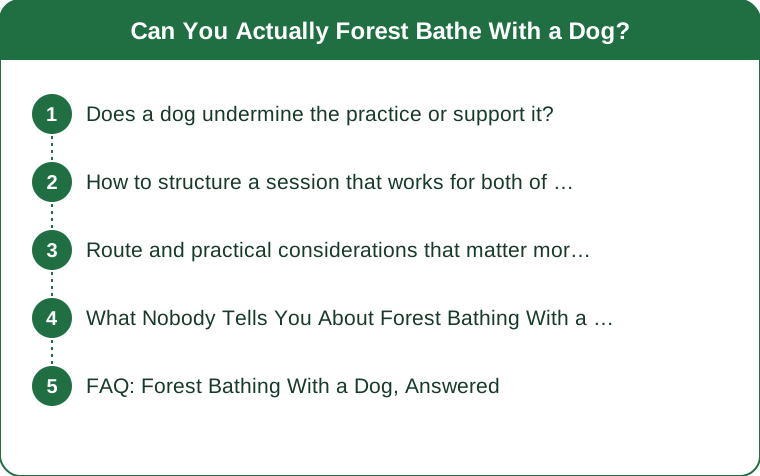
Does a dog undermine the practice or support it?
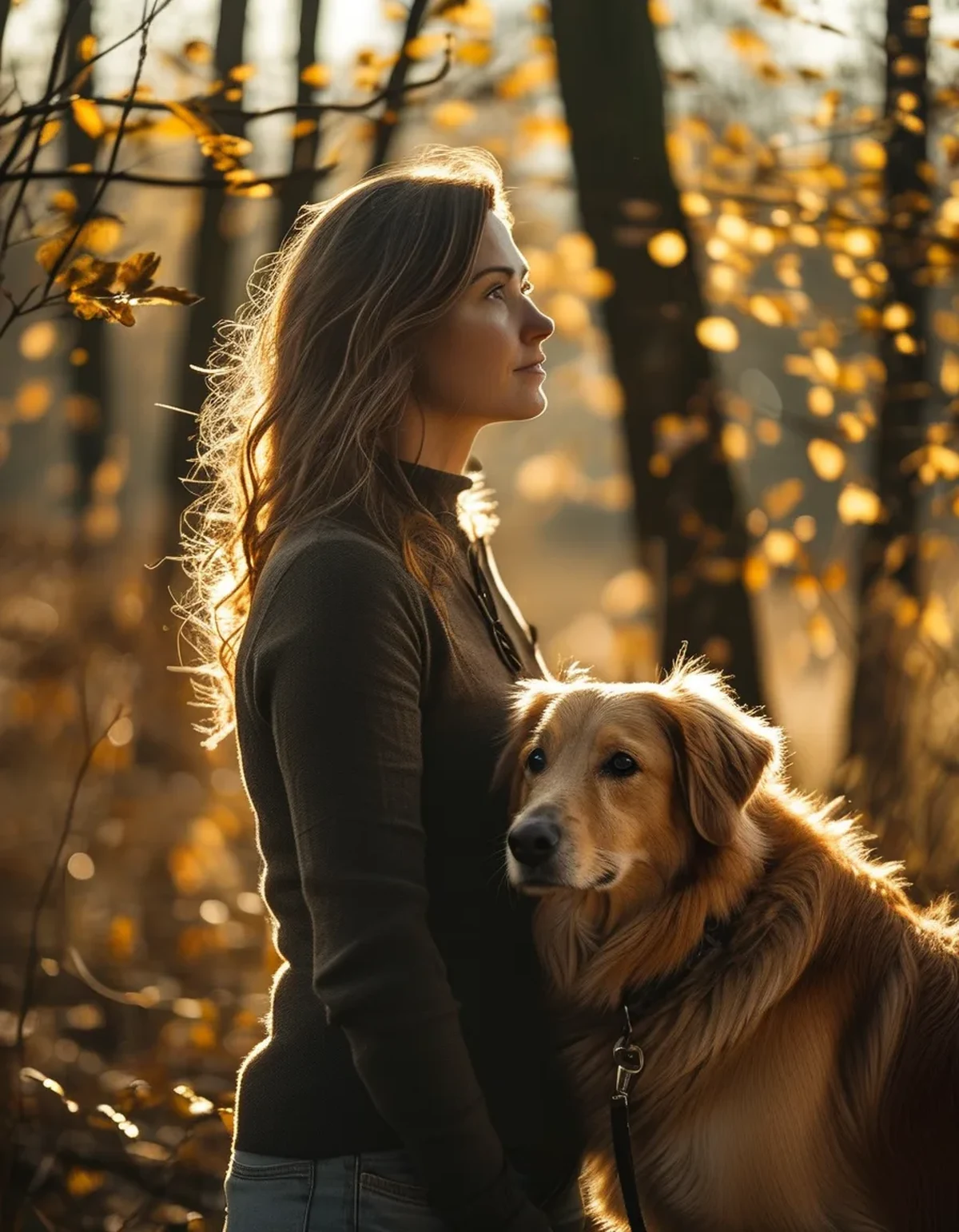
Both, in specific and predictable ways. The support is that dogs model exactly the attentional quality the practice is trying to cultivate - present, sensory, unhurried by anything except smells.
Watching your dog notice things is itself a legitimate entry point. If your own attention will not settle, following theirs for ten minutes usually settles it, because it takes the effort of directing attention off you.
The genuine loss is uninterrupted stillness. A sit-spot practice of twenty unbroken minutes is difficult with most dogs, and pretending otherwise leads to a frustrating session.
Vigilance is the real cost, not movement. Scanning for other dogs, livestock, or a lead tangle keeps part of your attention in a monitoring mode that is the opposite of the relaxed awareness you are after.
Which is why route choice does most of the work. A quiet, familiar, low-traffic route reduces vigilance more than any technique adjustment.
For many people the honest answer is that a dog-accompanied session is 70 percent of a solo one and happens four times as often. That trade is usually worth taking.
How to structure a session that works for both of you
Walk the first ten minutes at normal pace. Both of you need to burn off arrival energy before slowness is possible. Starting slow with a fresh dog produces pulling and frustration.
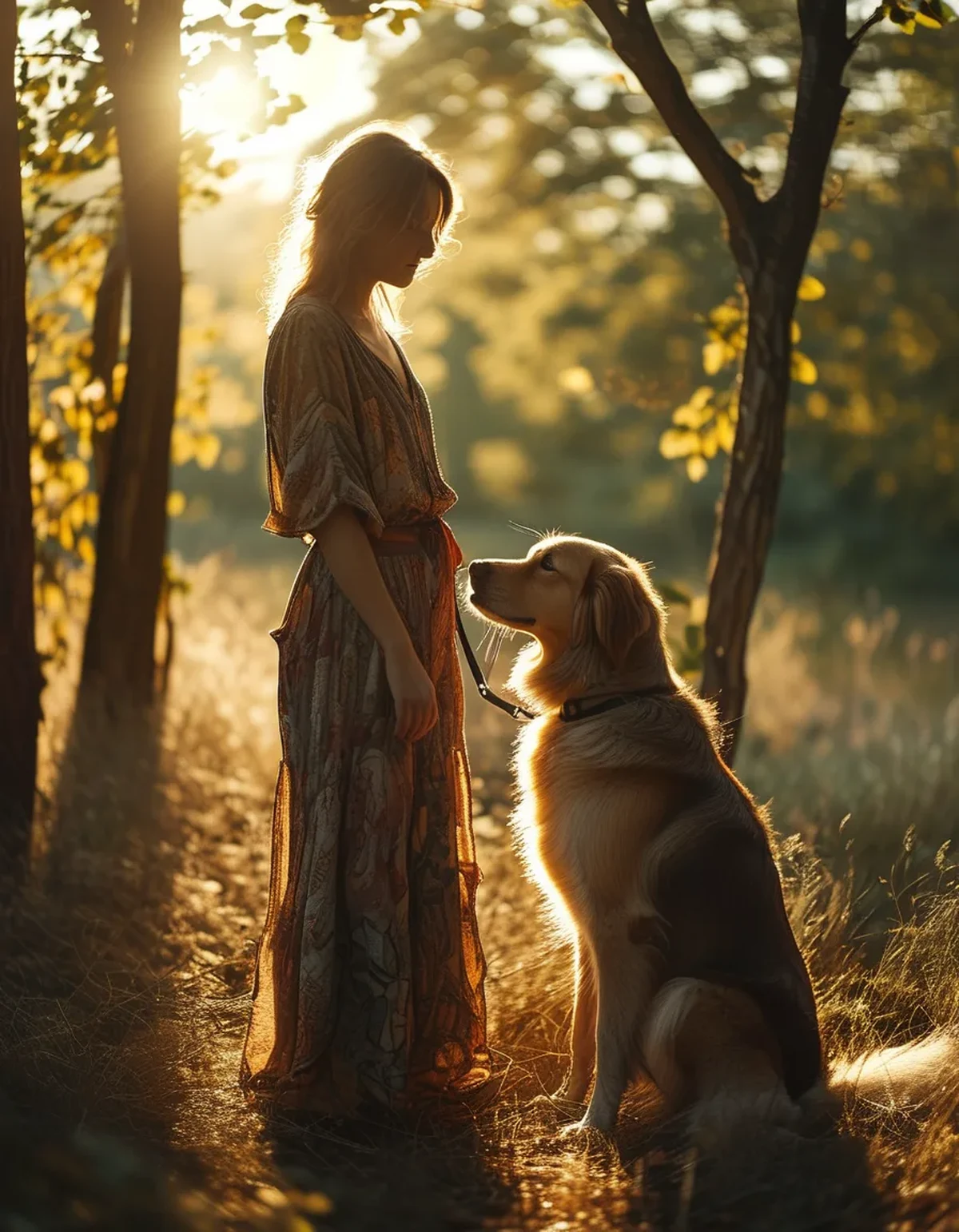
Then slow to roughly half your usual pace and let them lead the stops. Their sniffing pauses become your standing pauses, which gives the session a rhythm you do not have to impose.
Use their stops deliberately. When they stop to sniff, take three slow breaths and notice one thing you had not - sound, light, temperature on your skin. Thirty seconds each time, ten or twelve times, adds up to a real practice.
Pick one longer pause of three to five minutes, ideally somewhere your dog is happy to lie down. A familiar bench or a clearing they know works far better than a random stopping point.
Keep sessions to 30 to 40 minutes. Attention on both sides degrades after that, and a shorter good session beats a longer restless one.
End with two minutes standing still before you get back to the car or the gate. It marks the transition and stops the session leaking straight into the drive home.
And leave the phone away entirely - not in your pocket, which is a decision you have to make repeatedly, but in the car.
Route and practical considerations that matter more than technique
Familiar beats beautiful. A route your dog knows means less novelty-driven pulling and less scanning from you. Save the new trail for a normal walk.
Off-peak timing transforms the experience. Early morning on a weekday delivers something a Saturday afternoon on the same path simply cannot, and the difference is mostly about how many other dogs you meet.
Water access changes what your dog can tolerate, particularly on the last warm days of the season. A route with a stream extends how long a dog stays comfortable and relaxed.
Late summer and early autumn bring specific hazards worth knowing: ticks remain active well into autumn, harvest mites appear in long grass in late summer, and mushrooms emerge in numbers - some of which are seriously toxic to dogs. Check for ticks after every woodland walk.
Watch for wildlife sensitivity in the season. Deer become more active and more vocal into the rut in autumn, which is a genuine reason to keep dogs on leads in some woodland regardless of the local rules.
Bring water for both of you and a towel for the car. The most common reason a good session ends badly is a soaked, cold dog and a twenty-minute drive.
If your dog struggles with stillness at all, do not force the sit-spot element. A slow walk with frequent short pauses is a complete practice on its own, and it is the format most dogs can genuinely do.
What Nobody Tells You About Forest Bathing With a Dog
Your dog will find the session easier than you will. Sustained sensory attention in a woodland is their default state, not a skill they need to learn, and there is something clarifying about being the slower learner.
Their behaviour is a decent read on the environment. A dog that suddenly becomes alert has usually detected something - another animal, a person on the path - well before you would have, which paradoxically lets you relax your own scanning.
You will walk a shorter distance than you expect and feel like you did more. Half the distance at half the pace with twelve pauses is a completely different experience from a normal walk of the same duration.
Some dogs settle into it after three or four sessions and some never do, and that is largely temperament rather than training. A high-drive working breed may simply not be your forest bathing companion, and that is fine.
The lead matters more than you would think. A longer lead - within the limits of where you are - removes most of the low-level tension that keeps you both in a negotiation rather than a walk.
And you will notice your own breathing change when theirs does. People co-regulate with dogs, and standing beside a settled dog for three minutes reliably does something a timer does not.
FAQ: Forest Bathing With a Dog, Answered
Can you forest bathe with a dog?
Yes. The practice shifts from sustained stillness to repeated short pauses set by your dog’s stopping points, which many beginners find easier. Expect 30 to 40 minutes rather than 90.
Does a dog ruin the mindfulness element?
Only the deep-silence element. Following your dog’s attention is a legitimate entry point, and the main cost is the vigilance of monitoring them - which a familiar, quiet route largely removes.
How long should a session with a dog be?
Thirty to forty minutes, starting with ten minutes at normal pace to burn off arrival energy, then half pace with frequent pauses.
What should I watch for in the woods in late summer and autumn?
Ticks, which stay active well into autumn, harvest mites in long grass, mushrooms - some seriously toxic to dogs - and increased deer activity into the rut. Check for ticks after every walk.
What if my dog will not stay still?
Skip the sit-spot element entirely. A slow walk with many short pauses is a complete practice, and it is the format most dogs can genuinely manage.
TL;DR:
- A dog turns forest bathing from sustained stillness into repeated short pauses - a format many beginners find easier.
- Walk the first ten minutes at normal pace, then halve it and let their sniffing stops set your rhythm.
- Familiar routes and off-peak timing reduce vigilance more than any technique adjustment.
- Keep it to 30 to 40 minutes and leave the phone in the car, not in your pocket.
- Watch for ticks, harvest mites, toxic mushrooms, and autumn deer activity - and bring water for both of you.
A slightly diluted practice you do four times a week beats a pure one you do monthly.
Keep Reading
This article is for general informational purposes only and is not medical advice. Always consult a qualified health professional for guidance specific to you.