Is Forest Bathing Actually Different From Just Taking a Walk, or Is It the Same Thing With a Nicer Name
Forest bathing gets practiced by some people almost identically to a regular nature walk and by others as a genuinely distinct, much slower practice, which raises a fair question — is there an actual meaningful difference, or is forest bathing just a nature walk with a more marketable name? Here is what genuinely distinguishes them and whether the distinction matters for the actual benefit.
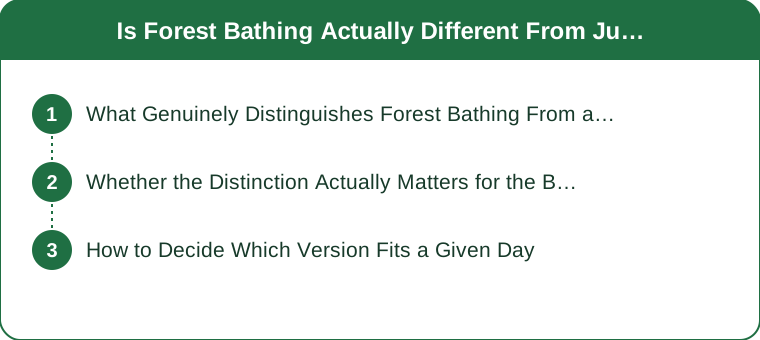
What Genuinely Distinguishes Forest Bathing From a Regular Nature Walk
The real differences: the the-pace-and-destination-orientation-differ-substantially (the forest bathing practice deliberately eschewing a destination or pace goal in favor of unhurried, directionless presence, while a typical nature walk usually still involves covering some distance or reaching some point, per the forest-bathing-guide fundamentals — the the-absence-of-a-destination-or-pace-goal-is-a-real-structural-difference-not-just-a-mood-difference), the the-forest-bathing-typically-includes-a-more-deliberate-sensory-engagement-practice-than-a-typical-walk (the practice often incorporating specific, deliberate sensory noticing exercises — texture, scent, sound — beyond the more general, incidental noticing that happens on an ordinary walk, per the sit-spot-practice-guide logic — the the-deliberate-structured-sensory-engagement-component-is-a-genuine-practice-difference-not-present-by-default-in-an-ordinary-walk), the the-forest-bathing-is-generally-practiced-in-a-genuinely-wooded-or-forested-environment-specifically-rather-than-any-outdoor-space (the specific environment type, per the city-park-micro-forest-bath-guide contrast, mattering somewhat to the traditional practice even though adapted urban versions exist, unlike a general nature walk which can happen in a much broader range of outdoor settings — the the-traditional-environment-specificity-is-a-real-though-increasingly-flexible-distinguishing-element), and the frame (the genuine distinctions as pace and destination orientation, a deliberate structured sensory engagement component, and traditional environment specificity — real, if sometimes subtle, differences rather than purely a rebranding of the same activity).

Whether the Distinction Actually Matters for the Benefit You Get
The honest answer: the the-research-on-both-shows-real-overlapping-benefit-so-the-distinction-matters-less-for-basic-benefit-than-for-practice-depth (the research on general nature exposure and the more specific forest bathing research both showing real stress-reduction and mood benefit, per the forest-bathing-benefits-science-guide logic, meaning the core benefit isn’t exclusively locked behind the more structured practice — the both-general-nature-exposure-and-structured-forest-bathing-show-real-overlapping-benefit-in-the-research), the the-the-more-structured-practice-may-provide-somewhat-deeper-benefit-for-people-specifically-seeking-a-mindfulness-or-presence-focused-outcome (the deliberate slowness and sensory focus of true forest bathing potentially providing a somewhat deeper or more specific benefit for someone specifically seeking a mindfulness-adjacent outcome, beyond the more general benefit a brisker walk still provides — the the-structured-practice-may-add-a-specific-additional-benefit-layer-for-a-mindfulness-focused-goal-specifically-beyond-what-a-brisker-walk-provides), the the-for-someone-mainly-seeking-general-outdoor-time-and-stress-relief-a-regular-walk-genuinely-captures-most-of-the-available-benefit (the person whose actual goal is simply more time outdoors and general stress relief likely capturing most of the available benefit through an ordinary walk, without needing to adopt the more formal structured practice — the a-regular-walk-genuinely-captures-most-of-the-available-benefit-for-someone-whose-actual-goal-is-general-outdoor-time-and-stress-relief), and the transition (the honest answer as the distinction mattering less for basic stress-reduction benefit and somewhat more for a deeper mindfulness-focused outcome — which in practice comes down to a simple day-to-day decision).
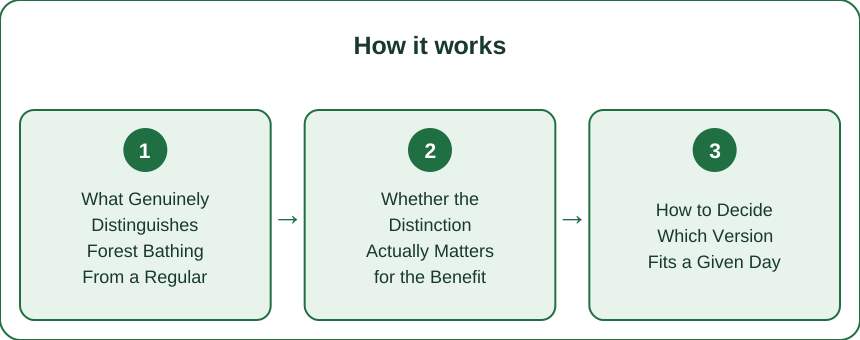
How to Decide Which Version Fits a Given Day
The practical decision: the the-time-available-and-actual-mental-state-that-day-matters-more-than-a-fixed-preference-for-one-approach (the amount of time actually available and the specific mental state on a given day mattering more to which version makes sense than committing permanently to one style, since a rushed day may only accommodate a brisk walk while a less pressured day allows the slower practice — the available-time-and-current-mental-state-on-a-given-day-should-drive-the-choice-more-than-a-fixed-permanent-preference), the the-a-hybrid-approach-of-mostly-walking-with-occasional-deliberate-pauses-captures-elements-of-both (the incorporating brief deliberate pauses for sensory noticing within an otherwise normal-paced walk offering a practical middle ground that doesn’t require committing fully to either the brisk walk or the fully slow structured practice — the a-hybrid-of-mostly-walking-with-occasional-deliberate-pauses-is-a-practical-middle-ground-that-doesnt-require-choosing-one-approach-exclusively), and the frame (the day-to-day decision as led by actual available time and mental state rather than a fixed preference, with a hybrid of mostly walking plus occasional deliberate pauses offering a practical middle ground on days that don’t clearly call for one full approach or the other).
Forest bathing and a regular nature walk overlap significantly but aren’t quite identical — forest bathing deliberately eschews a destination or pace goal in favor of unhurried, directionless presence, typically includes a more deliberate structured sensory engagement practice than the incidental noticing on an ordinary walk, and traditionally happens in a genuinely wooded environment specifically, even as adapted urban versions have grown more common. Whether that distinction actually matters depends on the goal: research on both general nature exposure and the more structured forest bathing practice shows real, overlapping stress-reduction and mood benefit, so the core benefit isn’t exclusively locked behind the more formal version, though the deliberate slowness and sensory focus of true forest bathing may provide a somewhat deeper benefit specifically for someone seeking a mindfulness-adjacent outcome. Day to day, the actual available time and mental state matter more than a fixed preference for one approach, and a hybrid of mostly walking with occasional deliberate pauses for sensory noticing offers a practical middle ground on days that don’t clearly call for one full approach or the other.
Keep Reading
This article is for general informational purposes only and is not medical advice. Always consult a qualified health professional for guidance specific to you.