How Long Should a Forest Bathing Session Actually Be? The Research Answer
Quick Answer: Research on shinrin-yoku shows measurable cortisol drops starting around 20 minutes, with the biggest benefit plateau around 2 hours. A rushed 10-minute walk mostly doesn’t count — but you don’t need a half-day trip either.
You’ve got 25 minutes between meetings and a park two blocks away. Is that even worth it? Turns out, yes — but the how matters as much as the how-long.

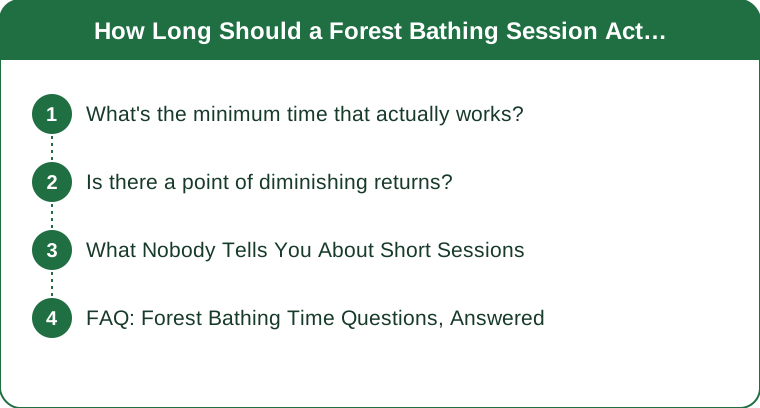
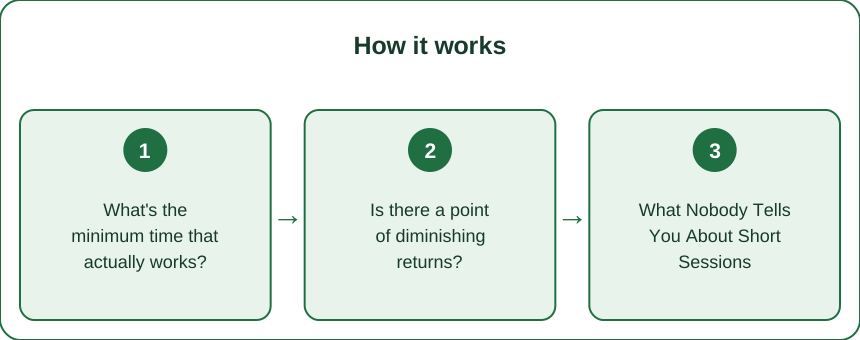
What’s the minimum time that actually works?
15-20 minutes is the threshold where studies start detecting measurable cortisol and blood pressure changes. Below that, you’re getting fresh air, which is nice, but not the physiological shift researchers measure.
The catch: those 20 minutes need to be slow and sensory, not a brisk walk with your phone out. Pace matters more than distance covered.
Is there a point of diminishing returns?
Yes — benefits plateau around 2 hours. Studies comparing 20-minute, 1-hour, and 2-hour sessions find the steepest improvement in the first 20-40 minutes, with gains flattening after that.
So a 90-minute Saturday session isn’t dramatically better than a focused 45-minute one. Consistency across the week beats one long monthly trip for mood and stress markers.

What Nobody Tells You About Short Sessions
Here’s the part that surprises people: a 20-minute session done 3x a week measurably outperforms one 2-hour session done once a month on stress and mood scores. Frequency compounds in a way single long trips don’t.
That means your lunch-break park loop isn’t a consolation prize — it might be the more effective habit, if you can make it a repeatable rhythm instead of a rare event.
FAQ: Forest Bathing Time Questions, Answered
Does a 10-minute walk count as forest bathing?
Not in the studied sense — it’s still good for you, just below the threshold where researchers detect cortisol change. Slow it down and extend to 15-20 if you can.
Do you need actual forest, or does any park work?
Dense tree cover with some quiet matters more than acreage — a well-treed urban park can work if it’s calm enough to slow your pace.
What time of day is best?
Morning sessions show slightly stronger cortisol effects in some studies, but any consistent time you’ll actually keep beats a theoretically ‘optimal’ one you skip.
TL;DR:
- 15-20 minutes is the minimum for measurable effect; benefits plateau near 2 hours
- Slow, sensory pace matters more than distance
- 3x 20-minute sessions a week beats one 2-hour monthly trip
- Any dense, quiet tree cover works — you don’t need true wilderness
Block 20 minutes, leave the phone in your pocket, and let pace do the work.
Keep Reading
This article is for general informational purposes only and is not medical advice. Always consult a qualified health professional for guidance specific to you.