The Forest Smell That's Actually Doing Something to Your Nervous System
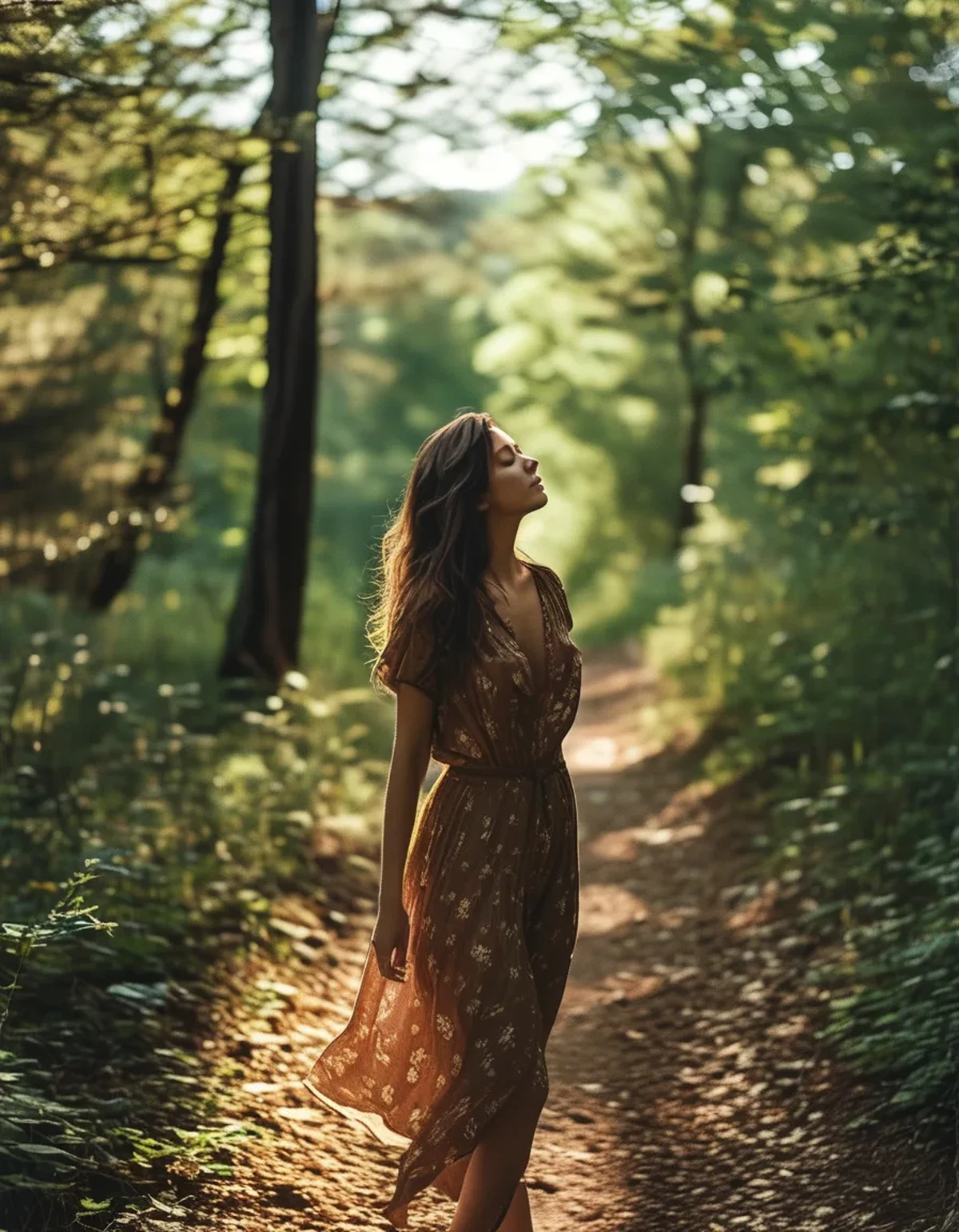
Quick Answer: Trees release airborne compounds called phytoncides, and studies on forest bathing have found associations between phytoncide exposure and reduced stress hormone levels and increased activity of certain immune cells. This is one of the more research-supported explanations for why forest bathing feels different from a walk in a scent-neutral environment like a gym or indoor track.

What exactly are phytoncides?
Phytoncides are airborne organic compounds trees release, partly as a natural defense against insects and decay — pine and cedar forests tend to have particularly high concentrations, which is part of why those specific forest types are commonly used in forest bathing research.
Is there real research behind the calming claim, or is it mostly anecdotal?
There’s a meaningful body of research, mostly out of Japan where the practice originated as shinrin-yoku, showing associations between time in phytoncide-rich forest environments and measurable changes in cortisol (stress hormone) levels and natural killer cell activity — though sample sizes in individual studies are often modest, and researchers note more work is needed to fully isolate scent from the many other forest-bathing variables (light, sound, movement).
Does this mean an artificial forest scent (candle, diffuser) provides the same effect?
Likely a smaller version of the effect, if any — most research has been conducted on actual forest environments with real, ongoing phytoncide exposure and the accompanying immersive setting (light, quiet, movement), and it’s unclear how much of the benefit transfers to bottled or artificial versions of the scent alone.
How much time does research suggest is meaningful?
Several commonly cited studies used sessions in the range of 2-4 hours across a day, though shorter visits are also associated with some measurable stress reduction — the research generally suggests more time produces stronger measured effects rather than there being one fixed minimum threshold.
What Nobody Tells You About Forest Scent
Season and tree type change phytoncide concentration significantly — conifer forests, and warmer months in general, tend to show higher airborne phytoncide levels than deciduous forests in cooler months, meaning the calming scent effect likely varies more by season and location than people assume.
The effect appears cumulative across a multi-day forest exposure in some studies, not just a single-visit phenomenon, which is part of the argument for regular forest time rather than a single occasional visit.
Immune cell activity changes (natural killer cell increases) reported in some studies have been observed to last several days after a forest visit in a few smaller studies, though this is an area still actively being researched rather than settled science.
FAQ: Forest Scent and Nervous System Questions, Answered
Do all forests have similar phytoncide levels?
No — conifer forests (pine, cedar, cypress) are generally associated with higher phytoncide concentrations than deciduous forests, which is why a lot of forest bathing research specifically uses conifer settings.
Is this effect the same as just being outside in fresh air generally?
Research suggests it’s related but somewhat distinct — the specific compound exposure from tree-dense environments appears to add something beyond general outdoor time, though both contribute to stress reduction.
Can city parks with fewer trees provide a similar benefit?
A smaller version, likely — tree density and type matter, so a park with mature conifers offers more of this specific effect than a sparse grassy area, though any green space time carries general stress-reduction benefits.
TL;DR:
- Trees release phytoncides, airborne compounds studied for associations with lower stress hormones and immune changes
- Research is strongest around actual forest immersion, particularly conifer forests, over several hours
- Season and tree type both affect phytoncide concentration and likely the resulting calming effect
- Some studied effects appear to last several days after a visit, though this area is still being researched
That distinct forest smell isn’t just atmosphere — it’s a measurable part of why the walk feels different from any other kind of exercise.
Keep Reading
This article is for general informational purposes only and is not medical advice. Always consult a qualified health professional for guidance specific to you.