5 Forest Bathing Mistakes That Turn a Calm Walk Into Just... a Walk
Quick Answer: The most common forest bathing mistake is treating it like exercise — walking fast with a destination in mind. Slow to about a quarter of your normal pace, drop the step-count goal, and give it at least 20 minutes before expecting any calming effect.
You went for a walk in the woods, checked your phone twice, hit your step goal, and came home feeling… exactly the same. That’s not a forest bathing failure on your part — it’s a mismatch between what forest bathing actually is and what most people assume it is.
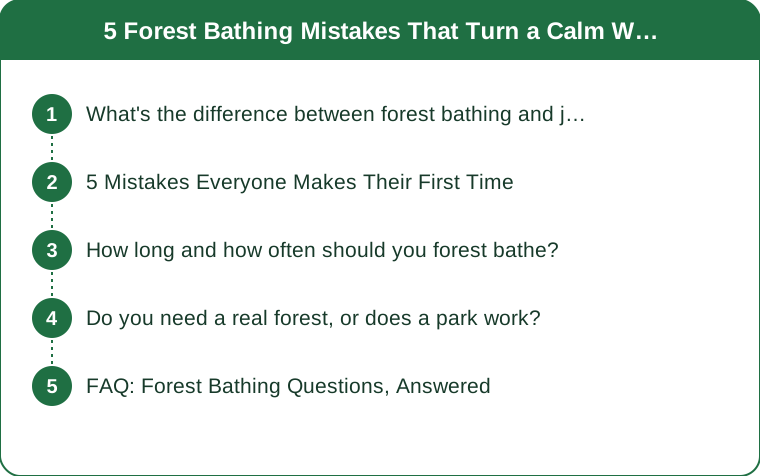
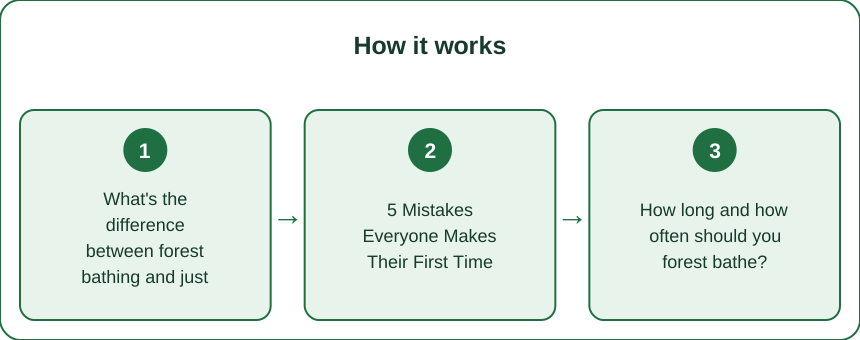
What’s the difference between forest bathing and just hiking?
Hiking has a destination. Forest bathing has none — the entire point is sensory immersion at a near-standstill pace, not covering ground.
The original Japanese practice, shinrin-yoku, translates to ‘forest bathing’ rather than ‘forest walking’ for a reason: you’re meant to soak in the environment through smell, sound, and touch, not burn through a trail. Most beginners unconsciously default to their normal walking speed because that’s the only mode they know outdoors.
5 Mistakes Everyone Makes Their First Time
1. Walking at normal pace. Slow down to roughly 25% of your usual speed — if that feels absurd, you’re doing it right.
2. Bringing a step-count goal. A phone buzzing with fitness reminders undoes the entire nervous-system benefit. Leave it in your pocket, screen off.
3. Talking the whole time. Conversation keeps your brain in social-processing mode. Even 10 silent minutes shifts the effect noticeably.
4. Rushing past the 20-minute mark. Most measured drops in cortisol and blood pressure start appearing after 20 minutes, not in the first five.
5. Picking a busy, noisy trail. Traffic hum in the background caps the benefit — even a small forgotten patch of trees beats a scenic but loud one.

How long and how often should you forest bathe?
20 to 40 minutes, ideally 2-3 times a week for a noticeable cumulative effect on mood and stress. A single session helps, but researchers tracking the effect most consistently see it build over weeks, not one outing.
If you only have 10 minutes, it still counts — just skip the mistake of expecting a 10-minute session to feel like a 40-minute one.
Do you need a real forest, or does a park work?
A city park with a decent tree canopy works — you don’t need old-growth wilderness. Studies on urban ‘micro forest bathing’ found meaningful stress-marker improvements from pocket parks with as few as a few dozen trees, as long as you can’t see traffic and can’t hear it well.
The density of trees around you matters more than the size of the park.
FAQ: Forest Bathing Questions, Answered
Do I need to touch the trees for forest bathing to work?
No, though many practitioners find touching bark or sitting against a trunk deepens the sensory engagement. It’s optional, not required for the core benefit.
Can forest bathing help with anxiety?
Several small studies link regular sessions to lower reported anxiety and cortisol, though it’s a complement to treatment, not a replacement — see a professional for ongoing anxiety.
What season is best for forest bathing?
Any season works; each brings a different sensory profile. Fall’s crisp air and changing smells make it an especially easy season to notice the effect for the first time.
TL;DR:
- Slow to a quarter of your normal pace — this isn’t a workout
- Leave the step counter behind, give it at least 20 minutes
- A quiet city park with decent tree cover counts, no wilderness required
- Aim for 2-3 sessions a week to notice the cumulative calming effect
Next time, pick a spot, silence your phone, and let the pace feel almost too slow. That discomfort fades faster than you’d think.
Keep Reading
This article is for general informational purposes only and is not medical advice. Always consult a qualified health professional for guidance specific to you.