Forest Bathing for Shift Workers: Making It Work on a Non-9-to-5 Schedule
Quick Answer: Shift workers get the same forest bathing benefits at any time of day — the mechanism is slow, sensory attention to nature, not a specific hour. Time your session right before sleep (whenever that is for you) to get the added benefit of the parasympathetic wind-down effect.
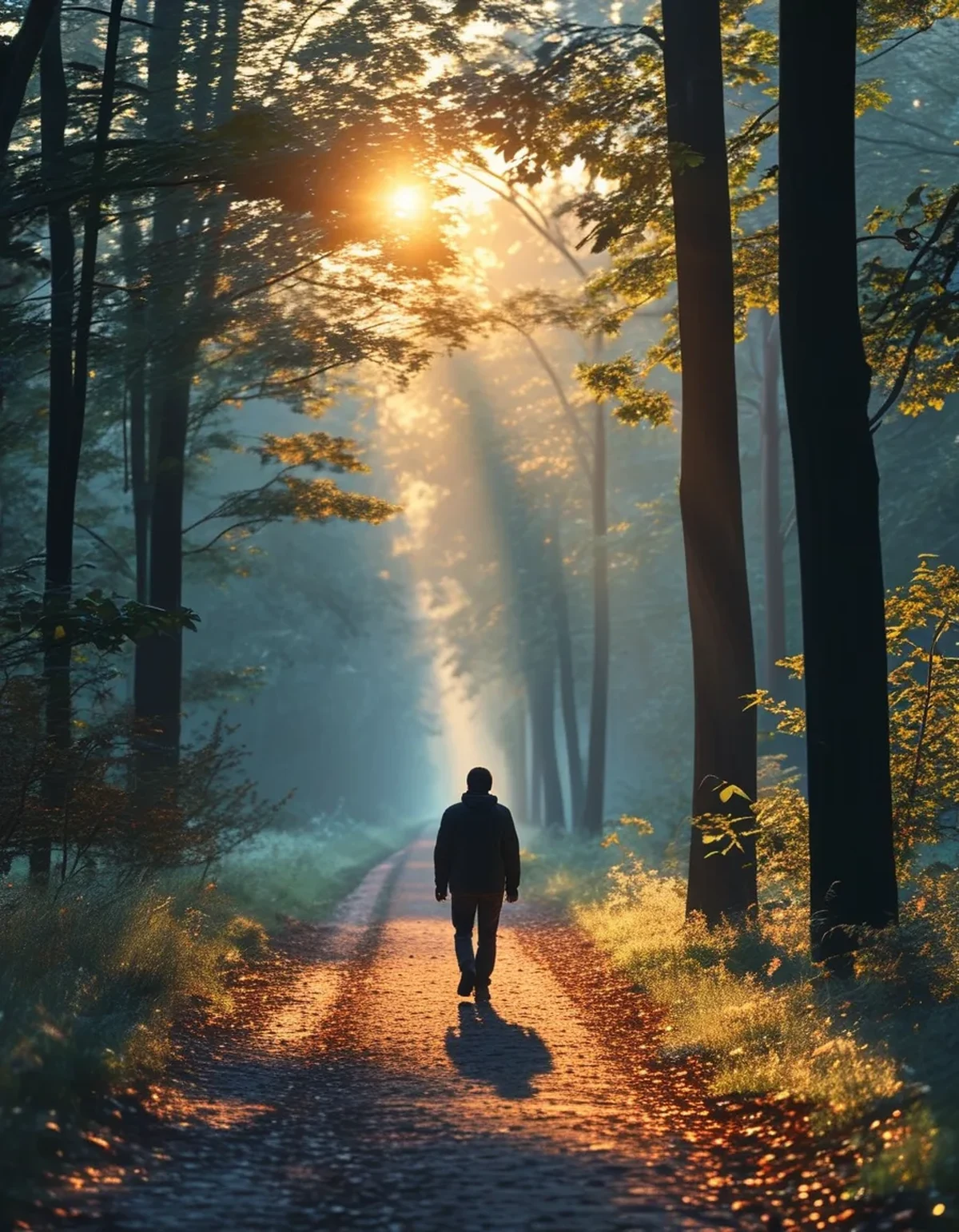
Almost every forest bathing guide pictures a mid-morning walk, which is exactly the time a night-shift worker is trying to fall asleep. The good news: nothing about the practice actually requires daylight or a typical schedule — it just requires unhurried attention.
Does forest bathing work at night or after a night shift?
Yes — the core mechanism (slow sensory attention, reduced sympathetic activation) doesn’t depend on sunlight. What changes is which benefit you’re optimizing for: a session right before your sleep window (whether that’s 8am or 8pm) leans into the wind-down effect, while a session after waking leans into the mood and focus benefit.
Many urban parks are lit and walkable at off-hours, and pre-dawn or early-morning forest bathing after a night shift has an added perk — fewer people around, which some shift workers find makes the sensory focus easier, not harder.
How do you fit a session into a rotating or irregular schedule?
Anchor it to a fixed point in your day, not the clock. If your equivalent of “evening” is 9am after a night shift, that’s when you forest bathe — right before you’d normally wind down for sleep.
On rotating schedules, the anchor point moves with you, but keep the sequence the same: session, then transition activity (tea, dim lights), then sleep. The consistency of the sequence matters more than the actual hour on any given day.

What Nobody Tells You About Nature and Circadian Rhythm
Here’s the part shift-work advice often misses: daylight exposure and forest bathing pull in different directions for night workers, and conflating them causes real problems.
Bright daylight exposure right before you try to sleep (say, 8am after a night shift) can delay your body clock and make sleep harder — the opposite of what you want. But a forest bathing session doesn’t require bright midday sun; overcast conditions, shaded trails, or early dawn light all deliver the sensory and stress-reduction benefits without the same circadian disruption.
If full daylight exposure is unavoidable on your walk home, wearing sunglasses for the last stretch before bed is a small, evidence-backed trick that separates the walk’s calming benefit from the wake-up signal of bright light.
What does a realistic shift-worker session look like?
20-30 minutes, timed right before your sleep window:
- Choose a shaded or dawn/dusk-lit path if avoiding bright light matters for your schedule
- Phone away or on airplane mode
- Slow pace, no fitness goal — this isn’t your cardio session
- Notice 3 things you can hear, 3 you can see, 1 you can smell
- Sunglasses on the return leg if daylight is unavoidable and sleep is next
That’s it — the same core practice as any forest bathing session, just anchored to your schedule instead of the sun’s.
FAQ: Forest Bathing for Shift Workers Questions, Answered
Can forest bathing replace a nap for shift workers?
No — it complements sleep, it doesn’t substitute for it. Use it as part of your wind-down routine, not as a reason to skip sleep.
Is a well-lit urban park good enough if there’s no forest nearby?
Yes. Tree cover, water, and relative quiet matter more than true wilderness — a well-treed urban park at 5am works fine.
Does forest bathing help with the mood dip common in night-shift work?
Many shift workers report a mood lift from consistent time in green space, though it’s not a substitute for treatment if you’re dealing with persistent depression or sleep disorders — that’s worth raising with a doctor.
TL;DR:
- The practice works at any hour — anchor your session right before your sleep window, whatever time that is
- Bright daylight before sleep can fight your body clock; shaded paths or sunglasses on the way home help
- 20-30 minutes, phone away, slow sensory attention — same core practice, different clock
- It’s a wind-down tool, not a nap replacement or treatment for persistent sleep or mood problems
Your schedule doesn’t have to match the postcard for this to work — it just has to be unhurried.
Keep Reading
This article is for general informational purposes only and is not medical advice. Always consult a qualified health professional for guidance specific to you.