Forest Bathing at Dawn vs Dusk: Which One Suits You?
Quick Answer: Dawn offers the richest soundscape, the sharpest scent from overnight humidity, and cortisol timing that suits alertness and clarity. Dusk offers falling light that supports winding down, warmer air, and a nervous system already shifting toward rest. Choose dawn if you want a session that sets up your day; choose dusk if you want one that closes it. Neither is better - they serve different purposes, and most people have a clear preference once they have tried both.
Most forest bathing guidance treats time of day as a scheduling detail. It changes the experience more than the location does.
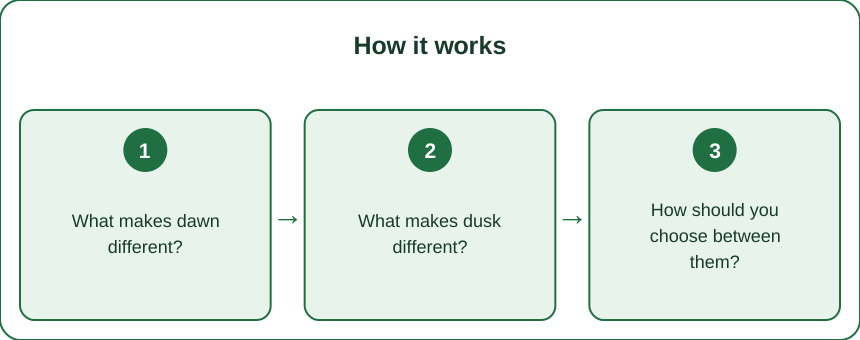
What makes dawn different?
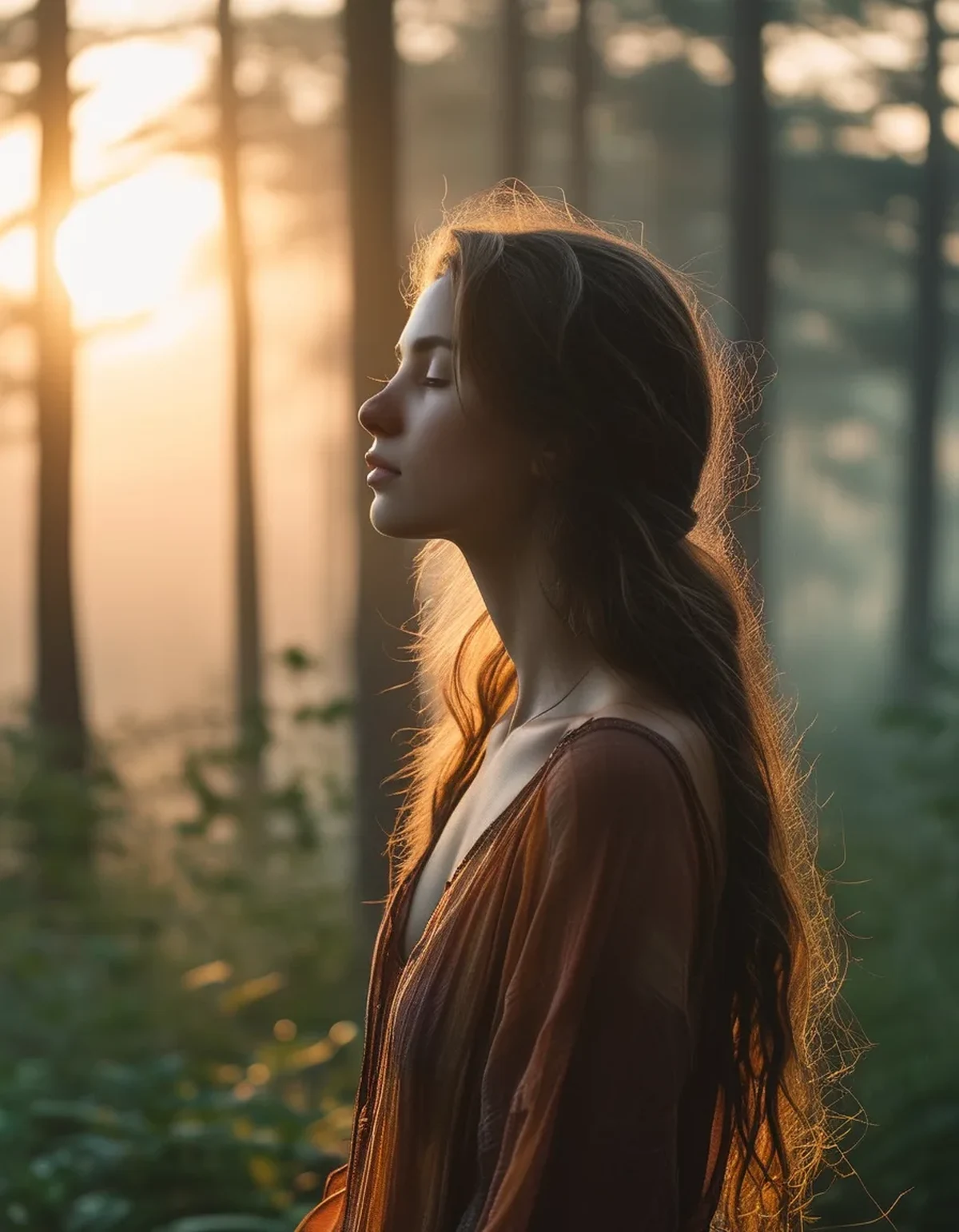
The soundscape peaks. The dawn chorus is the most acoustically dense period of a woodland day, and birdsong specifically has been associated in research with improvements in mood and perceived restoration. There is more to hear at dawn than at any other hour.
Scent is strongest. Overnight humidity and cool air hold volatile compounds close to the ground, and the wood, soil and leaf-litter scents are noticeably more present before the air warms and disperses them.
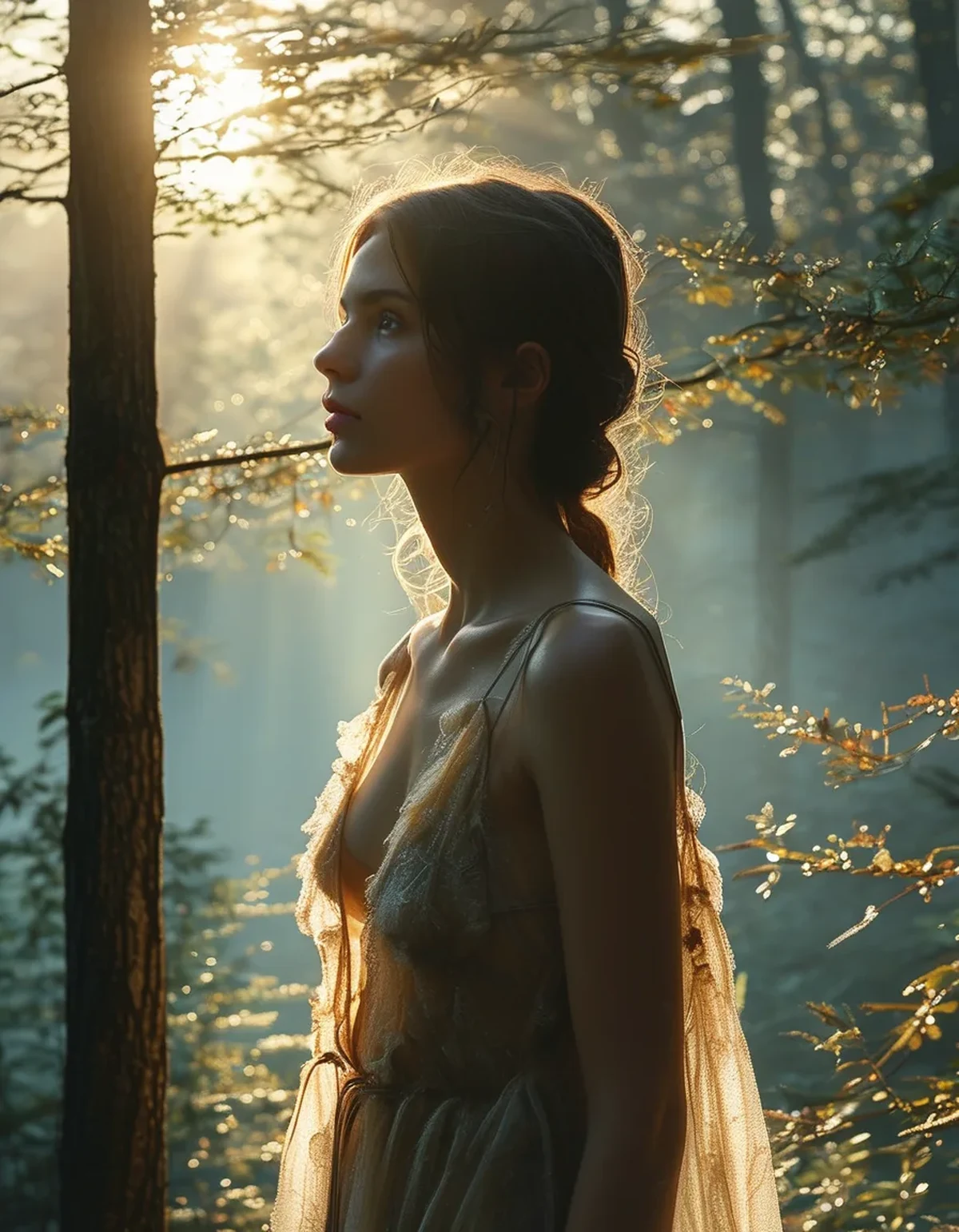
Light is directional and low, which produces the visual quality most people associate with the practice - long shafts through trunks, and often mist in the first hour after sunrise.
Your physiology is primed for attention. Cortisol naturally peaks in the first hour after waking, which supports alertness. That makes dawn well suited to a session where you want clarity or you are working through something.
Practical advantage: solitude. Even busy trails are quiet at dawn, and the sense of having the woods to yourself is a substantial part of what makes a session work.
What makes dusk different?
Falling light supports downshifting. Decreasing light is the primary signal for the evening transition, and moving through a slowly darkening woodland aligns the practice with what your body is already doing.
Warmer air, and a different scent profile. A day of sun releases warm resinous and dry-leaf scents that are absent at dawn. In late summer and autumn this is particularly pronounced.
The soundscape thins rather than builds, which some people find far more calming than the dawn chorus. Insects, distant birds, wind - the sound of the day ending.
Wildlife activity increases at the edges. Crepuscular animals become active, so dusk often gives more chance of seeing deer and other movement.
Physiologically, you are further from your cortisol peak and closer to the evening rise in melatonin as light fades. That makes dusk better suited to a session aimed at releasing tension rather than gaining clarity.
Practical advantage: it is easier to do. A dusk session does not require getting up early, which is the single biggest reason dawn sessions get planned and not completed.
How should you choose between them?
Choose dawn if: you want the session to shape your day, you respond to birdsong, you are working through a question or a decision, you value solitude highly, or you struggle with morning alertness and want a natural light exposure early.
Choose dusk if: you want to close the day, you carry work tension into the evening, you sleep poorly, you find the dawn chorus stimulating rather than calming, or mornings are simply not realistic for your schedule.
Try both before deciding. People are often surprised - the assumption that dawn is the serious version and dusk the convenient one does not survive contact with the actual experience.
Consider the season. In late summer and autumn, dawn arrives at an increasingly reasonable hour and dusk gets earlier, so both become more accessible at once. This is the easiest time of year to try each.
And consider what you will actually do. A dusk practice you keep beats a dawn practice you intend. Consistency does more here than optimization.
What Nobody Tells You About Timing a Session
Dusk requires more planning than dawn. Light fades faster than expected in woodland - typically well before it does in the open - so a session that starts comfortably can end in genuine darkness. Know your exit route, carry a light, and plan to be walking out before you need it.
Dawn is colder than the forecast suggests. Air temperature usually bottoms out around sunrise, and woodland holds cool air. Dress for meaningfully colder than the day’s low, particularly in autumn.
Insects have a strong preference for dusk in many regions, and it is the most common reason people abandon evening sessions in late summer. Long sleeves solve it.
Morning light exposure has a documented circadian benefit that dusk does not provide, so if you also want the sleep and alertness effects of early daylight, dawn is doing two things at once.
The transition itself is the point for many people. Arriving before sunrise and staying through it, or arriving before sunset and staying past it, gives you the change rather than a static condition - and that shift is what most experienced practitioners end up preferring.
Autumn mornings offer the mist. If the visual experience matters to you, cool nights over warmer ground produce ground mist, and this season is when it is most common.
FAQ: Dawn and Dusk Forest Bathing, Answered
How long should a session be at either time?
Around 20 minutes produces measurable benefits in much of the research, and longer sessions of an hour or more are commonly reported as more satisfying. Either time of day works within that range.
Is dawn actually better for stress reduction?
The research on forest bathing does not clearly favor one time of day for stress outcomes. What differs is the character of the experience and how it fits your own rhythm, which is a more useful basis for choosing than a marginal difference in any measure.
Is it safe to be in the woods alone at dusk?
Use the same judgment you would anywhere - a familiar route, a charged phone, someone knowing where you are, and a headlamp. The main hazard is losing the light and the trail, and it is entirely manageable with a light and an earlier exit than feels necessary.
What if I can only manage midday?
Midday works and it is a different experience again - less scent, less birdsong, more people. It is unambiguously better than not going, and the practice does not require optimal conditions to be worth doing.
TL;DR:
- Dawn gives the richest birdsong, the strongest scent, low directional light and solitude - it suits a session that sets up your day.
- Dusk gives falling light, warm resinous scent, thinning sound and an easier schedule - it suits closing the day.
- Physiology differs: dawn aligns with the cortisol peak and morning light benefits, dusk with the shift toward rest.
- Plan a dusk session around the light fading faster in woodland, and dress warmer than forecast for dawn.
- Autumn makes both more accessible at once, and morning mist is at its most likely.
The honest answer is that the best time is the one you will actually go. Try each once this autumn, notice which one you are still thinking about the next day, and make that the one.
Keep Reading
This article is for general informational purposes only and is not medical advice. Always consult a qualified health professional for guidance specific to you.