The Lunch-Hour Forest Bath: Shinrin-Yoku for City Schedules
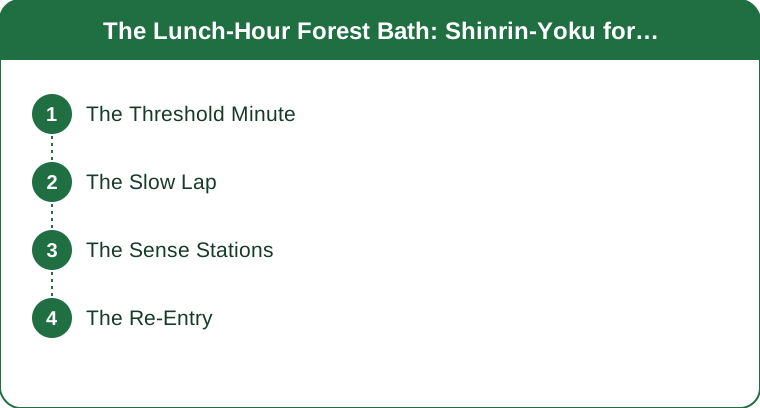
Quick Answer: A 20-minute city park forest bath works because tree density matters more than wilderness. The protocol: one minute at the threshold with your phone silenced, five minutes walking at half your normal pace toward the densest tree cover, thirteen minutes on sensory stations — sounds, then light through leaves, then touch — and two minutes sitting still before re-entry.
Shinrin-yoku research gets done in actual forests, which is lovely and completely unavailable at 12:30 on a Tuesday.
Here’s the useful part: several of those studies used urban parks, and the results held. What seems to matter is tree density and attention, not whether you drove two hours to find a trailhead.
Does a City Park Actually Count as Forest Bathing?
Broadly, yes — with one condition.
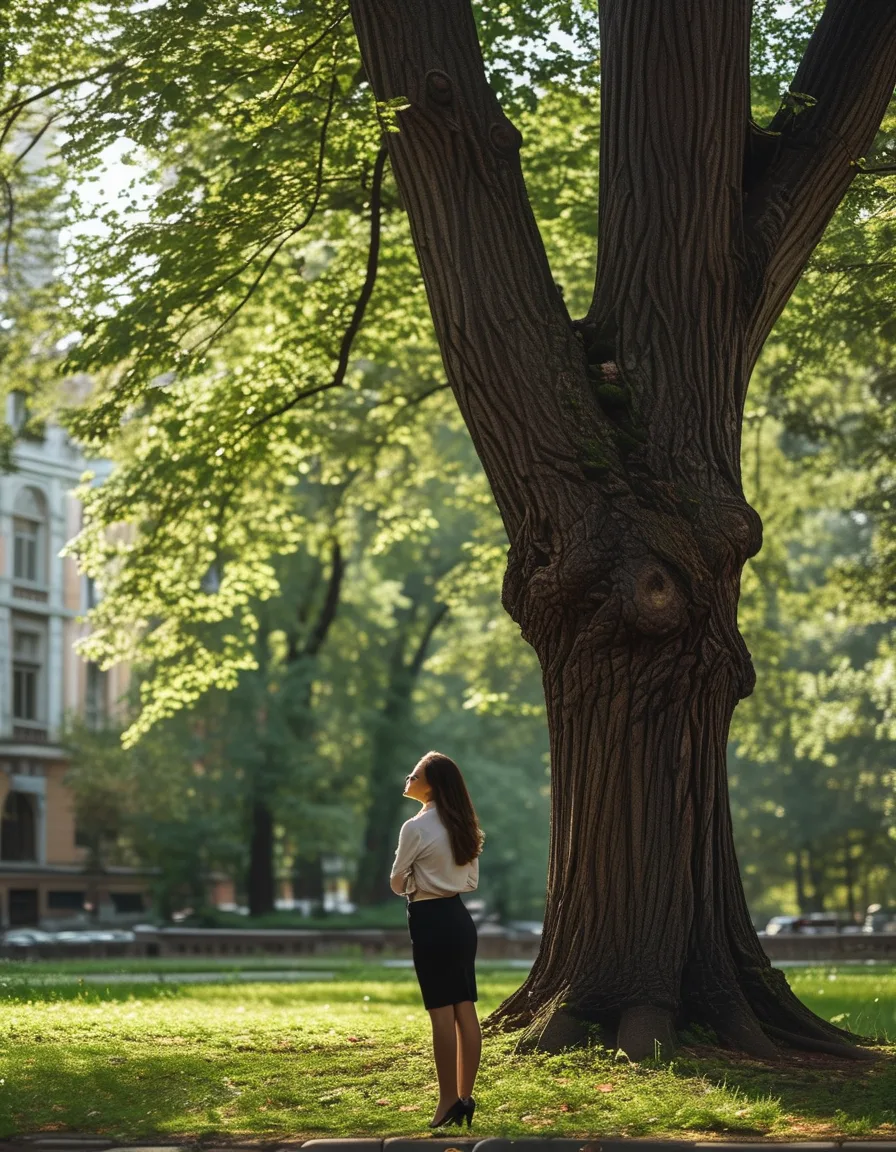
The practice isn’t defined by remoteness. It’s defined by unhurried, multi-sensory attention in a tree-dense environment. A park with a real canopy delivers most of what a forest does: filtered light, softened sound, cooler air, and a visual field full of the irregular patterns that seem to occupy attention gently rather than demanding it.
The condition is the attention part. Twenty minutes of half-present walking while checking messages is worth considerably less than fifteen minutes fully arrived. The phone is the whole variable here, which is why the protocol starts where it does.
Practical note: aim for the deepest tree cover your park owns, not the open lawn. Density is dose.
What’s the 20-Minute Protocol?
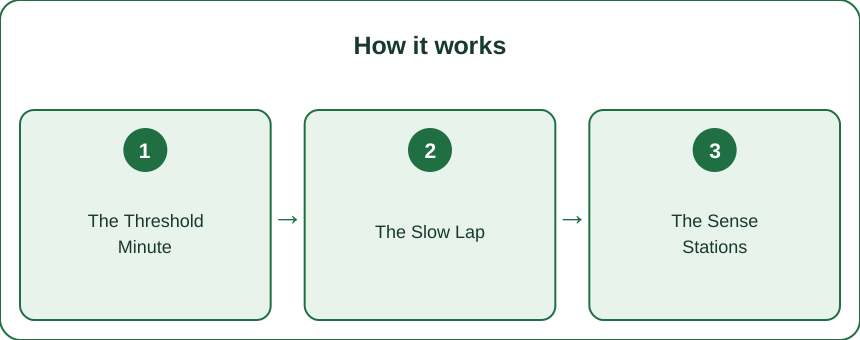
Four phases. Time them loosely; the sequence matters more than the stopwatch.
Minute 1 — the threshold. Stop at the park’s edge. One slow breath in, one slower out. Phone to silent and into a pocket, and this part is non-negotiable — a phone on vibrate is still a phone you’re waiting on.
Minutes 2 to 6 — the slow lap. Walk at roughly half your commute pace. It should feel faintly embarrassing, which is a good sign you’ve got it right. Head toward the densest tree cover available. This is where the downshift from meeting-brain starts.
Minutes 7 to 19 — the sense stations. Five minutes on sound: listen in layers, the near birds first, then the traffic receding into something more like weather. Five minutes on light: watch the flicker of sun through moving leaves — that dappled, irregular pattern is one of the specific things researchers keep pointing at. Three minutes on touch: put a hand on one tree and mean it. Nobody’s watching, and the bark will not gossip.
Minutes 20 to 21 — re-entry. Stand or sit still. Name one thing you can physically feel — the temperature on your arms, your feet on the ground. Then walk back at normal pace.

Why Does Slowing Down Matter So Much?
Because speed is what turns a park into a corridor.
At commute pace you’re navigating — scanning for obstacles, tracking your route, running the next meeting in your head. At half that pace there’s nothing to navigate, and attention has to land somewhere. That’s the shift the whole practice depends on.
There’s also a physiological argument. Slow walking with long exhales is the kind of low-demand movement that tends to nudge the nervous system toward its rest-and-digest side, which is roughly what the cortisol measurements in this research keep gesturing at.
And practically: a slow lap makes the sense stations possible. You can’t listen in layers while walking fast. The pace isn’t decoration — it’s the mechanism.
5 Mistakes Everyone Makes With Micro Forest Bathing
1. Keeping the phone available “just in case.” Silent-and-pocketed is the minimum. A phone you might check is a phone you’re partly attending to for the entire twenty minutes.
2. Choosing the open lawn over the tree cover. The lawn is nicer to look at from a distance; the canopy is where the effect is. Walk the extra ninety seconds to the dense part.
3. Adding a podcast. Audio fills exactly the channel the practice is trying to open. If you need something, silence is the something.
4. Treating it as exercise. A brisk lap is a fine thing and a completely different thing. This one only works below a certain speed.
5. Skipping it on the days you most need it. The busiest Tuesday is the one where twenty minutes changes the afternoon most, and it’s also the one where you’ll tell yourself you can’t spare it.
The fourth is the most common failure by far — people default to walking-for-fitness pace out of pure habit and then wonder why it felt like a normal walk.
How Do You Fit It Into a Real Workday?
Attach it to lunch rather than treating it as an extra block. Eat at your desk in ten minutes and take the twenty outside; net cost to the day is close to zero.
Twice a week is a realistic starting cadence. Doing it well twice beats doing it distractedly five times.
Dress for standing still, not for walking — you’ll be stationary for over half of it, and a park bench in shade is cooler than the walk over. In late summer that means something breathable; comfortable walking leggings or a soft high waist yoga pant work better than office trousers you’ll worry about sitting on damp grass in.
And a gentle caveat: this is a wellbeing practice, not a treatment. If low mood, anxiety, or exhaustion is persistent rather than situational, it’s worth talking to a doctor or therapist — a park is a good supplement and a poor substitute.
Mini FAQ
How long does forest bathing need to be to work?
Studies have used sessions from about 15 minutes to several hours. Twenty focused minutes is a reasonable practical minimum, and consistency appears to matter more than any single long session.
Can you forest bathe in a small city park?
Yes, if it has genuine tree cover. Canopy density and undistracted attention are the two things that seem to matter most — total acreage much less so.
What’s the difference between forest bathing and a walk?
Pace and attention. A walk is transport or exercise; forest bathing is deliberately slow, sensory, and goalless. Same park, different practice entirely.
TL;DR:
- Tree density and attention matter more than wilderness — city parks count.
- Protocol: 1 minute threshold, 5 minutes slow lap, 13 minutes of sense stations, 2 minutes still.
- Walk at half your normal pace; the slowness is the mechanism, not the mood.
- Phone silent and pocketed, no podcast, head for the densest canopy.
- Twice a week done properly beats five distracted attempts.
Twenty minutes between meetings, zero wilderness required. The park was a clinic all along.
Keep Reading
This article is for general informational purposes only and is not medical advice. Always consult a qualified health professional for guidance specific to you.